The cost of solar panels for commercial buildings, line by line
On an office, a retail unit, a hotel or a leisure centre, the panels are rarely what moves the price. The building does. This guide takes the cost drivers in the order a facilities manager meets them on a real project, then shows how payback, the 2026 tax position and the payment routes change the number you actually carry.
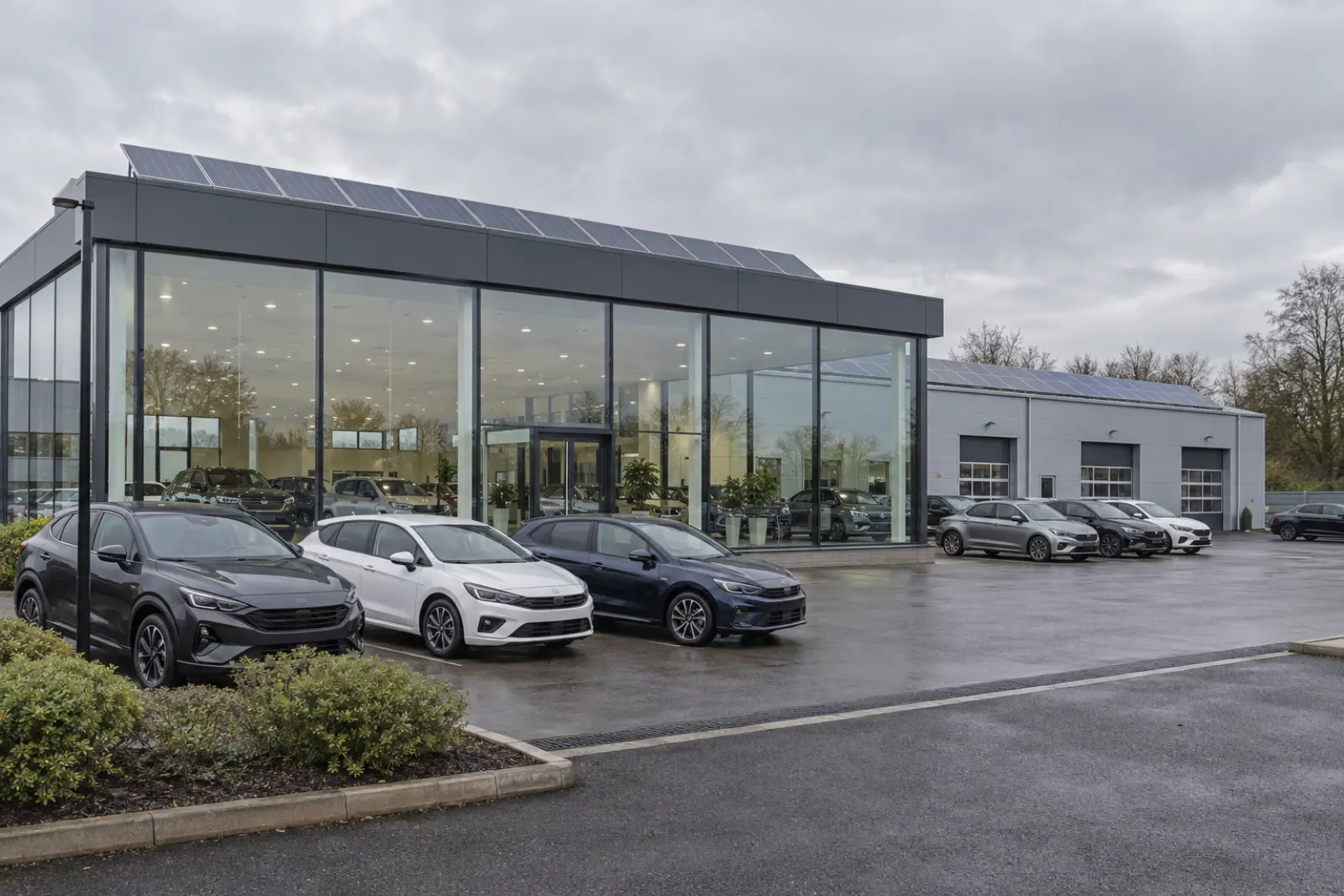
no price per kWp / every figure sourced and dated / survey before quotation
What drives the cost of solar panels on a commercial building?
The cost of a commercial solar installation on an office, shop, hotel or leisure building is a construction cost: the price of getting panels safely onto one particular roof, connecting them to one particular switchboard and clearing them with the insurer, the network operator and, on let property, the landlord.
What solar panels cost on a commercial building is set by the building far more than by the panels, and that is why we do not publish a price per kWp. A published rate is an average across buildings that are not yours, and on commercial buildings the spread is wide. A single storey retail unit with a sound roof and rear service yard is a different job from a five storey office in a conservation area with a lift overrun, a chiller compound and a pavement scaffold. The panels, inverters and cable are a similar commodity on both. The rest is not.
Fig. 1 draws the eight places cost sits on a typical town centre building, numbered in the order they usually surface. The useful column is how each one behaves. Mounting grows with the size of the array. Access, the switchboard work, fire safety measures and the lease work are close to fixed per building, which is why small commercial solar systems cost more per unit of capacity than large ones. And three items only exist if the survey finds them: a roof that needs work first, network reinforcement, and the legal work on let property.
How to compare two commercial solar quotes
When two quotes for one building are far apart, the difference is almost never the panels. To compare them properly, ask each installer for the same breakdown and compare line by line:
- roof works, stated as included, excluded or a provisional sum
- the mounting system, with the structural report it relies on
- access: scaffold, licences, crane lifts and any out of hours premium
- the electrical scope from the roof isolators to the switchboard and export meter
- the G99 application, the export limit assumed and any reinforcement allowance
- fire safety measures, and whether the insurer has seen the design
- commissioning, monitoring and handover documents
A cheap commercial solar panel quote usually has one of those lines missing or left provisional, and the money arrives later as a variation. Comparing the lines, rather than the headline total or a rate per kWp, is the only way to compare like with like.
- 1 Roof covering and remaining life only if found Repair, overlay or re-roof before the array goes on
- 2 Mounting and structural capacity grows with array Ballasted east-west or mechanically fixed, checked against the frame
- 3 Access and edge protection fixed per building Scaffold, crane lifts, highway licences, out-of-hours working
- 4 Plant, shade and usable area sets the size Screens, lift overruns and set-backs take roof out of use
- 5 Switchboard, metering, cable route fixed per building Spare ways, riser route, export meter, half hourly data
- 6 G99 study and DNO reinforcement only if required Study and application fixed; reinforcement only if the network needs it
- 7 Fire safety measures fixed per building What the insurer asks for under RC62: isolation, access, detection
- 8 EPC, lease and legal let property only EPC reassessment, landlord consent, licence or roof lease
Is the roof ready to carry solar panels?
Roof readiness is the first cost question on any commercial building, because an array stays in place for decades and the covering under it has to last as long, or be replaced first.
Roof covering and remaining life
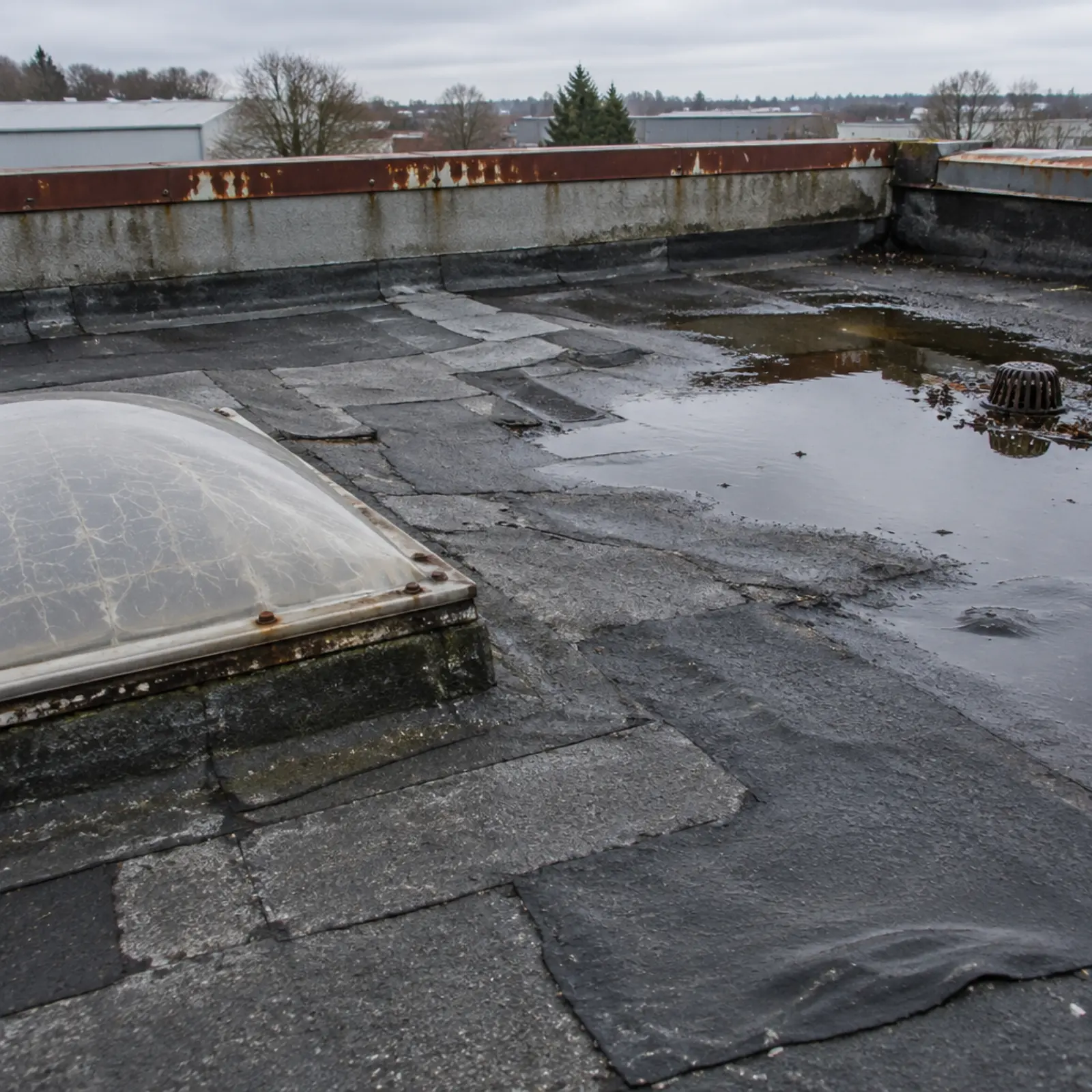
Most offices, hotels and leisure buildings have flat roofs finished in felt, single ply membrane or asphalt, and each has a finite life. If the covering will need replacing well before the solar panels reach the end of theirs, the cheaper order of work is usually to re-roof first, because lifting and refitting an array later means paying for access, a temporary disconnection and the labour twice. Patching the roof now and planning a lift and relay in eight years is sometimes right, but it belongs in the business case as a cost, not as a surprise. Ponding water, blistering and failed laps near outlets are what a survey looks for, together with the roof warranty position, because some membrane warranties are voided by fixings or unapproved ballast.
- The covering has less life left than the panels
- There is ponding, blistering or repeated leak repair
- The roof warranty would not survive the installation
- You plan insulation upgrades for the EPC anyway
- The covering is recent and still under warranty
- The manufacturer approves the mounting system
- A lift and relay is costed into the business case
- The building is being sold or refurbished within the lease term
Mounting type on flat roofs
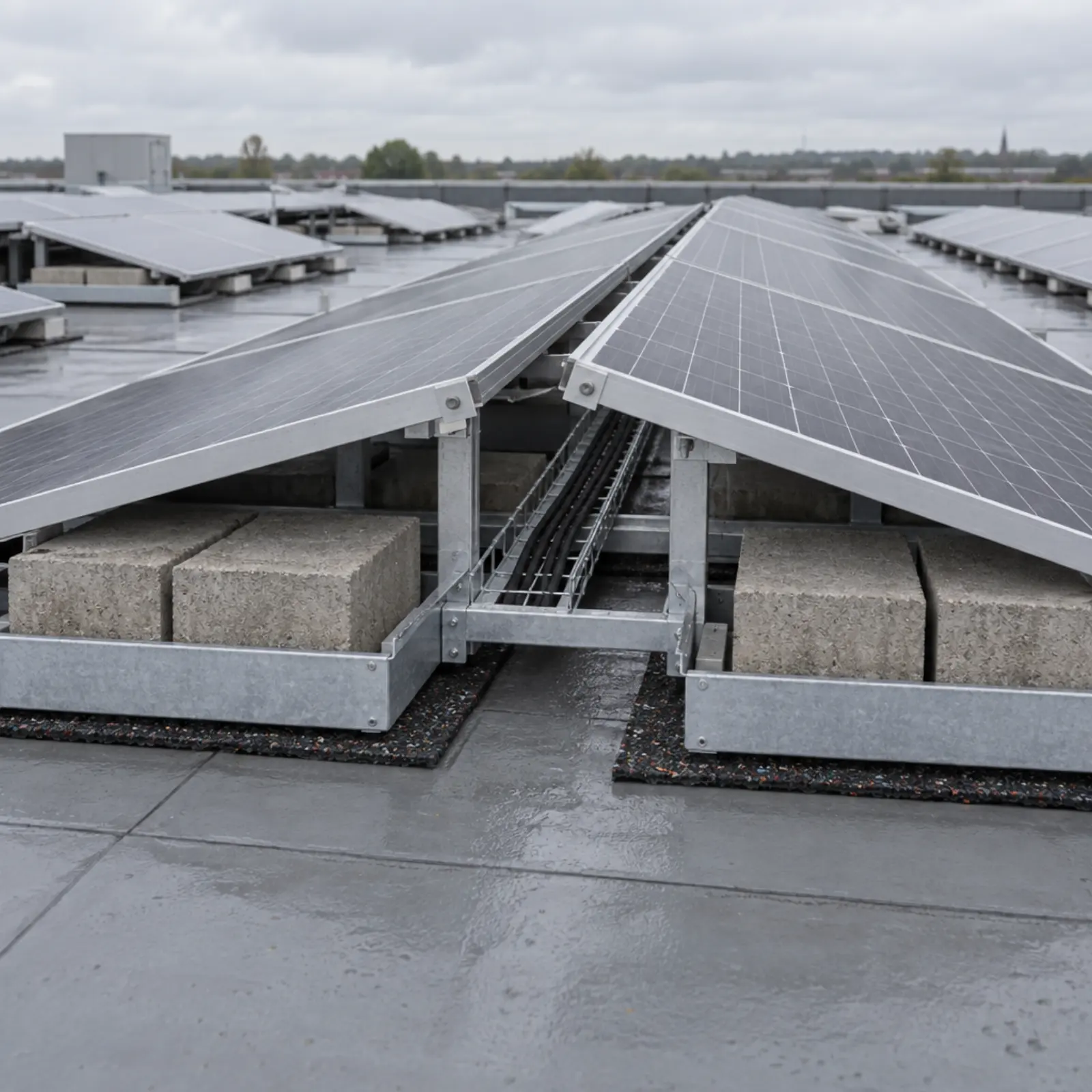
There are two families of mounting on a flat commercial roof. Ballasted east-west systems sit on the roof in low paired rows held down by weight, with no penetrations through the waterproofing, and they fit more panels into the usable area because east-west rows barely shade each other. Mechanically fixed systems bolt through the covering into the deck or frame, need far less ballast, and suit roofs that cannot take the extra weight, at the cost of every fixing being a detail that has to be sealed and warranted. The choice changes the equipment cost, the labour and the roofing work, which is why two quotes for the same office can be for different systems.
Structural capacity
Whether the roof can carry the load is a question for a structural engineer, not a rule of thumb that installers carry from job to job. Older concrete decks, lightweight steel decks over wide spans, and roofs already carrying plant are all checked against the added dead load and against wind uplift at the roof edge and corners. If the calculation fails, the options are a lighter mounting, a smaller array, or strengthening, and each has a price. The structural report is a fixed cost per building whatever the answer.
Plant, shade and usable area
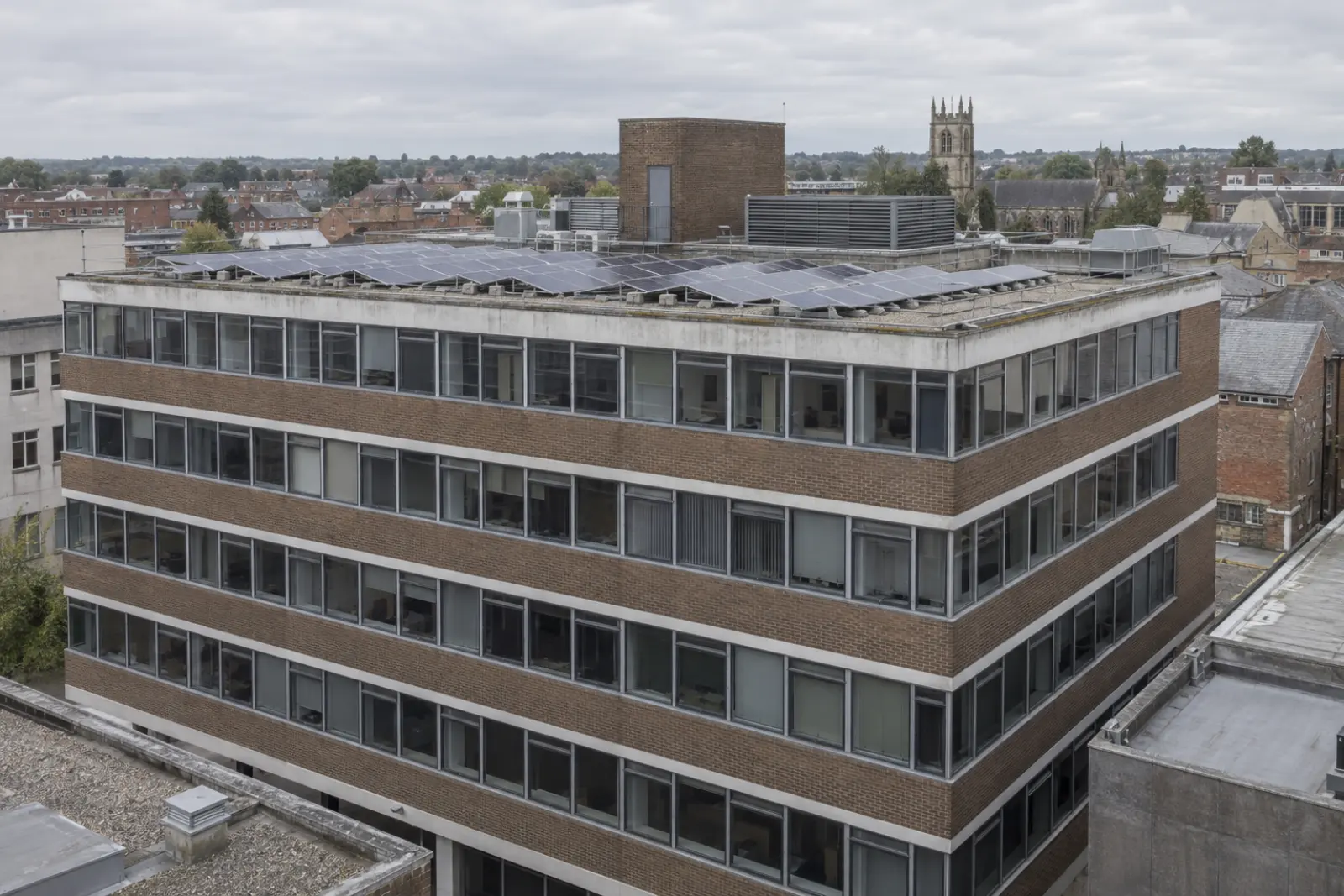
A commercial roof is rarely empty. Chillers, air handling units, lift overruns, extract flues, satellite dishes and plant screens all take area, and all cast shade on the strip beside them. In England, Class J permitted development also keeps equipment at least 1 metre from the external edge of the roof, and on a flat roof no higher than 1 metre above its highest part. What remains after plant, shade, set-backs and maintenance walkways is the usable area, and usable area is what sets the size of the system. As a working check, a module of about 2.2 square metres is rated at about 0.45 kWp, so each kWp needs roughly 4.9 square metres of panel before walkways and spacing are added.
What does access cost on an occupied town centre building?
Access is the cost line that separates commercial buildings from sheds on an industrial estate: the building stays open, the public walks past it, and the roof is often three or more storeys up.
Scaffold, hoists and highway licences
Materials and people have to reach the roof, and edge protection has to be in place before anyone works near an open edge. Where the only elevation is on the street, a scaffold on the highway needs a licence from the highway authority, usually with pedestrian protection and a gantry over the footway. That brings a licence fee, a longer hire period and sometimes night working to erect and strike it.
Crane lifts
Ballast, rails and pallets of panels often go up by crane in a small number of planned lifts. On a town centre site a lift can need a road closure or parking suspension, and an agreement for the jib to oversail neighbouring property. The crane is a day rate, but the traffic management and permits around it are what take the time.
Out of hours working
A hotel with guests, a store trading seven days, a gym open from six in the morning or an office with tenants on every floor will usually want noisy work, deliveries and the switchboard connection outside trading hours. Evening and weekend labour costs more, and a planned shutdown for the electrical tie-in has to be agreed with every occupier affected. None of this changes the panels. It changes the programme, and the programme is what installers are pricing when they quote a commercial solar panel installation on an occupied building.
What electrical and grid connection work sits behind the array?
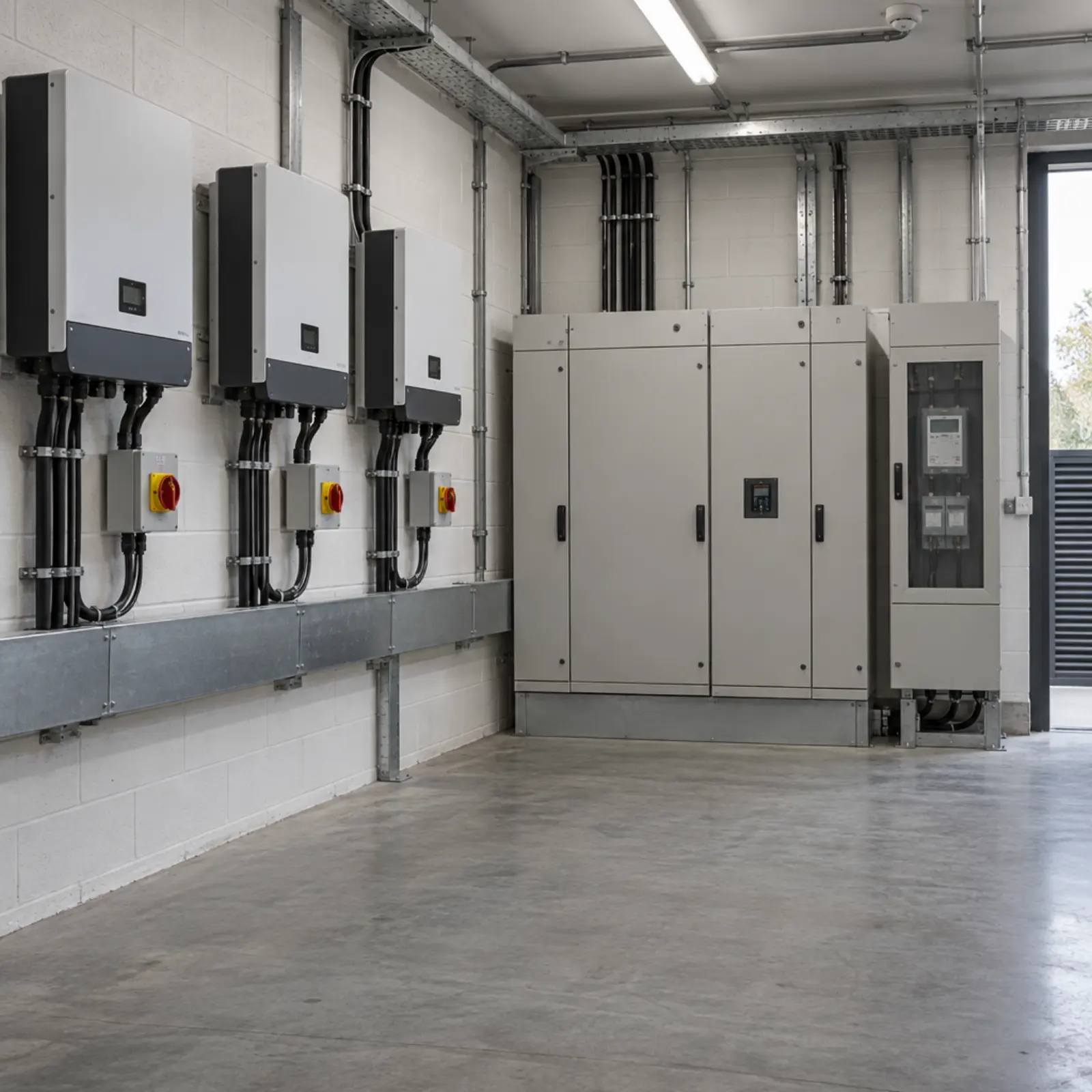
The electrical scope runs from the rooftop isolators, down a riser to the switchboard, and out through the meter to the local distribution network and the grid, and it is the line most often left as a provisional sum in a cheap commercial solar panel quote.
Switchboard capacity and the cable route
The inverters connect into the building's main switchboard, which needs a spare way of the right rating, or an upgrade if it has none. On a multi-storey building the cable route down through risers, ceiling voids and fire compartments is often the larger cost, because every penetration of a fire compartment has to be sealed and recorded.
Half hourly metering and export
Most commercial buildings of any size already have a half hourly meter, and that record of your energy use is the data that sizes the system. To be paid for exported solar energy you need export metering and an export registration with a supplier offering a Smart Export Guarantee tariff. Ofgem sets the rules for the SEG, but not the rate: suppliers set their own tariffs, which must always be above zero, for eligible installations up to 5 MW.
The G99 study and any DNO reinforcement
Anything above 3.68 kW per phase connects under G99, which means an application to the distribution network operator, the company that owns the local network, before the design is fixed. The operator can accept the export requested, offer a lower export limit, or require reinforcement. Since Ofgem's Access reforms took effect on 1 April 2023, a generation customer pays a share of reinforcement only at the voltage level of its connection, subject to a high cost threshold above which it pays in full. An export limit is often the cheaper answer: on a building that uses most of its generation, limiting export costs very little of the annual benefit.
What do the insurer, the EPC and the lease add to the cost?
Three parties outside the build itself shape the cost on a commercial building: the property insurer, the energy assessor who reissues the EPC, and, where the building is let, the landlord or tenant on the other side of the lease.
Fire safety measures insurers ask for
RC62, the joint code of practice for fire safety with PV on commercial roofs, was published in 2023 by the Fire Protection Association with RISCAuthority, MCS and Solar Energy UK, and insurers increasingly make compliance with it a condition of cover. In practice that means DC isolation and cable routes that firefighters can understand, clear access routes across the roof, spacing from rooflights and plant, a thermographic inspection regime, and sometimes arc fault detection. Tell your insurer before installing solar panels on the roof, while the design can still change, because a requirement raised after installation is paid for twice.
EPC reassessment for landlords
A non-domestic EPC is an asset rating produced by SBEM modelling of the building, and on-site renewable generation is part of that calculation, so solar PV can improve the rating. How much depends on the building. To take the credit you need a new EPC after the installation, which is a modest fixed cost. It matters because a landlord may not continue to let non-domestic property in England and Wales with an EPC below E unless an exemption is registered, and the government's interim response of 18 June 2026 sets EPC B, where cost effective, for let buildings over 1,000 square metres from 2031, with the 7 year payback test kept.
Lease and legal costs where the building is let
On a multi-let building the roof is usually retained by the landlord, so a tenant needs consent and a licence for alterations, and the landlord needs to check that the service charge and repairing clauses allow the cost to be recovered. A roof lease or PPA adds its own agreement, often with a lease of airspace, cable easements and a reinstatement clause. Both sides' solicitors are a real cost and a real delay, and they belong in the budget from the start.
How does payback work on a commercial building?
The payback period is how many years of annual benefit it takes to repay the installed cost, and on a commercial building the annual benefit is decided mainly by self-consumption: the share of the solar energy the panels generate that the building uses as it is made.
Every unit the array makes goes one of two ways. If the business uses it, that unit replaces a unit you would have bought, and it saves your full import rate, including the network and policy charges on your business energy bills. If the building does not, it is exported and earns the SEG rate, which is set by your supplier and is usually a fraction of what you pay to import. The same array on two buildings can therefore pay back at very different speeds with no difference in the equipment at all.
Commercial buildings vary more than most sectors here. A supermarket with refrigeration running all day, a hotel with laundry and kitchens, a leisure centre heating a pool and an office with daytime cooling consume the bulk of the generation. A showroom closed on Sundays, or an office that empties at weekends and over the summer holidays, exports far more. So the model starts from a year of your half hourly readings, never from a sector average.
- generation used on site, worth your delivered day rate
- generation exported, paid at the Smart Export Guarantee rate
Shape only, with no axis numbers, because the real split comes out of twelve months of half hourly meter data rather than a sector average. A site working through daylight pushes the demand line up and the exported area shrinks. A site that goes quiet after lunch does the opposite.
Fig. 3 shows why the split matters so much. It is arithmetic, not a forecast. If a share of generation is exported at a rate worth a fraction of the import rate, the annual benefit falls and, for the same installed cost, payback lengthens. With export worth 30% of the import rate, a building using half its generation on site takes about 1.5 times as long to pay back as one using all of it. Put your own export and import rates in and the curve moves, but the shape does not: self-consumption is the lever, and the installed cost is only half of the sum.
Figure data
| Used on site | r = 0.15 | r = 0.3 | r = 0.5 |
|---|---|---|---|
| 30% | 2.47x | 1.96x | 1.54x |
| 50% | 1.74x | 1.54x | 1.33x |
| 70% | 1.34x | 1.27x | 1.18x |
| 90% | 1.09x | 1.08x | 1.05x |
| 100% | 1.00x | 1.00x | 1.00x |
What the payback period leaves out
Not every reason businesses put solar panels on a commercial building shows up in simple payback. Renewable energy generated and used on your own roof is metered, and it reduces the grid electricity behind your scope 2 emissions, which many businesses now report and many occupiers ask landlords about. Renewable energy on the roof can also help a let building's EPC and how it markets to the next tenant. And each unit you self-consume has its cost fixed by the solar PV system you paid for, not by your next energy contract, which takes part of your energy spend out of the market. Nobody can tell you what energy will cost in ten years, us included, so treat that as reduced exposure to the market rather than as a promised saving. Businesses weigh it separately from the money.
Where battery storage changes the sum
Battery storage moves excess solar energy from the middle of the day into the evening, which turns an exported unit back into a self-consumed one. It is a second investment with its own payback period, so we size the commercial solar system first and look at storage second. It earns its keep on buildings with a large midday surplus and an evening load, such as hotels and gyms, and where a demand peak drives a capacity charge. On a supermarket that already uses almost everything it generates, a battery has little to do.
How are solar panels treated for tax in 2026?
Solar panels are special rate plant for capital allowances: HMRC designated all capital expenditure on the provision of solar panels as special rate from 1 April 2012 for corporation tax and 6 April 2012 for income tax.
That single classification decides which reliefs apply, and it rules one out. Full expensing, the permanent 100% first year allowance for companies, is for main rate plant, so it does not cover solar panels. Nor does the new 40% first year allowance for expenditure from 1 January 2026, which HMRC's policy paper of 26 November 2025 confines to main rate expenditure. The reliefs that do apply, as at September 2026, are these.
- Annual Investment Allowance. Up to 1 million pounds of qualifying plant and machinery a year can be deducted in full in the year of spend, including special rate expenditure. Companies, sole traders and most partnerships can claim it; companies under common control share one allowance.
- 50% first year allowance. A company within the charge to corporation tax can deduct 50% of new, unused special rate expenditure in the year it is incurred, from 1 April 2023, made permanent following the Autumn Statement 2023. The balance goes into the special rate pool. A company cannot claim both this and full expensing on the same spend.
- Writing down allowance. Whatever is not relieved up front is written down in the special rate pool at 6% a year on a reducing balance. The November 2025 changes cut the main rate from 18% to 14% but left the special rate at 6%.
Two cases need care. Plant provided for leasing is excluded from the 50% allowance, with an exception for background plant or machinery for a building let under an excluded lease, so a landlord installing solar on a let building should ask whether that exception applies. And where a funder owns the array under a PPA or roof lease, the funder claims the allowances, not the building owner or the occupier. We are not accountants and this is not tax advice. Run the numbers with and without the relief: a building case that only stands up after tax is weaker than one that stands up on the energy saving alone.
How can a business pay for commercial solar panels?
A commercial solar installation can be paid for in cash, spread through asset finance, or provided by a funder under a power purchase agreement or roof lease, and each route changes who owns the panels, who claims the allowances and who keeps the saving.
The right route depends as much on the building's ownership as on the numbers, and commercial solar finance is only worth arranging once the building costs are known. An owner-occupier with a long hold is in the simplest position. A tenant business with five years left on the lease may never recover a cash purchase of commercial solar panels, and a landlord who does not pay the energy bills gets no saving from self-consumption at all unless the lease passes some of it back. Grants for commercial buildings are limited and change often; the current position is on our grants page, and the landlord and tenant split is on our landlords page.
| Route | Who owns the array | Capital allowances | Usually suits |
|---|---|---|---|
| Cash purchase | Your business | Your business claims them | An owner-occupier with capital, a long hold and a strong daytime load |
| Asset finance or hire purchase | Your business, at the end of the term | Usually your business, check the agreement with your accountant | The same building case, with the cost spread across a term instead of paid up front |
| Power purchase agreement | A funder | The funder, not you | An occupier who wants cheaper daytime power with no capital outlay, on a long enough lease |
| Roof lease | A funder or the landlord | The array owner | A landlord who would rather rent out the roof than own a generating asset |
Whichever route you choose, compare every option against the same self-consumption model and the same grid connection answer. A PPA with no capital cost can look better than a purchase until you notice that the funder's margin sits on every unit for the life of the agreement. A purchase can look better than a PPA until you price in the re-roof, the scaffold licence and the lease work that a funder would have absorbed. The survey gives you the building costs and the generation model; the comparison follows from them.
Get the costs for your own building
Send the postcode and the type of building. The survey replaces the drivers on this page with measured figures: the roof condition, what the structure will carry, the usable area, the electrical and grid position, and modelled generation against your own energy use.
Lenzie Consulting Ltd arranges the survey, design and installation through an MCS-certified partner. The survey is free and you are under no obligation to proceed. Nothing on this page is a quotation, and no saving is guaranteed.
Questions about the cost of commercial building solar
- What is the average cost of a commercial solar panel?
- A single panel is the least informative number in a commercial solar panel installation. Panels are a traded product sold by the watt. On a commercial building most of the cost is elsewhere: the mounting, the scaffold and crane, the electrical work to the switchboard, the G99 application and any network reinforcement, the fire safety measures the insurer asks for and, on let property, the lease work. That is why we do not publish a price per kWp or an average cost per panel. The survey produces a quotation broken into those lines for your own building.
- How much do solar panels for commercial buildings cost?
- The cost of solar panels for commercial buildings is set by the building more than by the panels. Two offices of the same floor area can price very differently because one needs a re-roof first, a scaffold licence over a busy pavement and a switchboard upgrade, while the other has a sound roof, rear access and spare capacity in the plant room. Ask for any quote to be broken into roof works, mounting, access, electrical and grid work, fire safety measures, and professional and legal costs, then compare the lines rather than the total.
- Are commercial solar panels worth it?
- Whether commercial solar panels are worth it comes down to one ratio: the share of their output your building uses on site. A self-consumed unit saves the full import rate on your business energy bill, including the non-energy charges. An exported unit earns the Smart Export Guarantee rate your supplier offers, which is usually well below that. Supermarkets, hotels, leisure centres with pools and offices with daytime cooling tend to absorb nearly all the output. A building that is empty at weekends exports more and pays back more slowly. Twelve months of half hourly data settles the question for your own site.
- What is the 20% rule for solar panels?
- There is no 20 percent rule in UK law or guidance for solar panels on commercial buildings. No part of the planning rules, the Building Regulations, the G99 connection process or HMRC guidance contains one. The real limits on a commercial array are what the roof structure can carry, the roof left after plant, shade and the 1 metre edge set-back that permitted development requires in England, the rating of your incoming supply, and the export the network operator will accept.
- Do I need planning permission to install solar panels on a commercial building?
- In England, rooftop solar on a non-domestic building is usually permitted development under Class J of Part 14 of the General Permitted Development Order 2015, and the former 1 MW limit was removed from 21 December 2023. Conditions apply: nothing within 1 metre of the external edge of the roof, no more than 1 metre above the highest part of a flat roof, and no permitted development on a listed building or scheduled monument. Above 50 kW, which covers most commercial arrays, the developer must first apply to the local planning authority for a determination on prior approval of the design and appearance, in particular glare on neighbouring land. Wales and Scotland have their own rules. Our planning permission page sets out the detail.
- Can a business claim capital allowances on solar panels?
- Yes, in most cases, but solar panels are special rate expenditure, which HMRC has designated since April 2012 (Capital Allowances Manual CA22335). That means full expensing, which is for main rate plant, does not apply to them. The Annual Investment Allowance of up to 1 million pounds a year can cover special rate spend for companies, sole traders and partnerships. A company within the charge to corporation tax can instead claim the 50% first year allowance on new, unused special rate plant, with the balance written down at 6% a year. Plant provided for leasing is excluded from the 50% allowance, subject to an exception for background plant in a building. We are not accountants; confirm the position before you model payback after tax.
- Does battery storage improve the payback on a commercial building?
- Battery storage improves payback only where there is surplus generation to move or a demand peak to shave. A retail unit that already uses most of its daytime generation has little excess to shift, and battery storage there mostly adds cost. An office that empties at five, or a hotel whose load peaks in the evening, has more surplus to shift. Battery storage is sized from your half hourly data after the solar panels are settled, never before.
- Who pays for solar panels on a let commercial building?
- It depends on who benefits and for how long. A landlord may fund the array to improve the EPC and recover the cost through the service charge or a green lease clause, where the lease allows it. A tenant may fund it under a licence for alterations if the remaining term is long enough to recover the cost. Or a third party funds it under a PPA or roof lease. Our landlords page covers the split in detail.